
This post contains affiliate links.
Published: June 27, 2026 · ⏱ 8 min read · Ustaz Ahmad Raza, Senior Quran & Tajweed Teacher
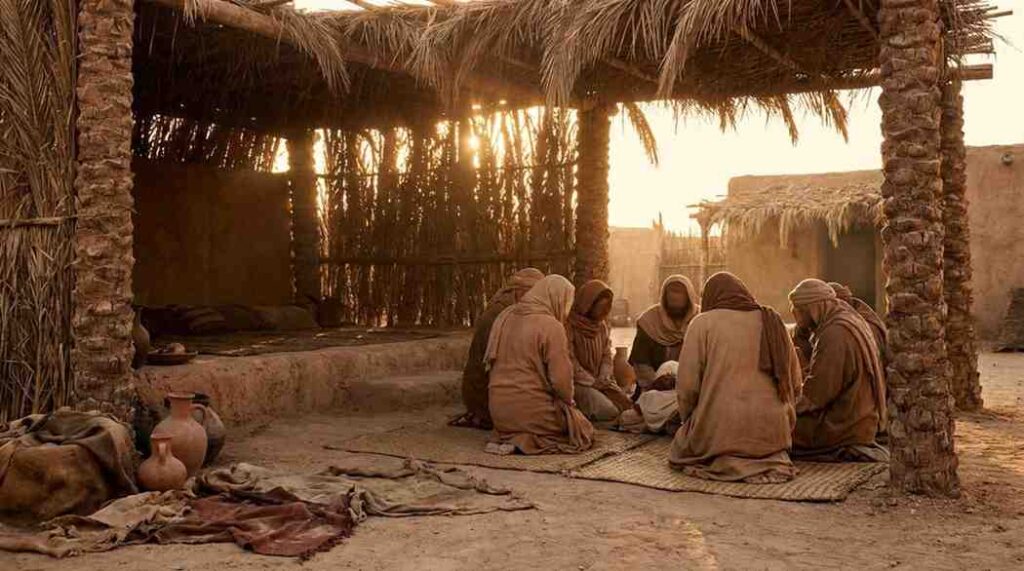
In the early years of Islam in Madinah, at the back of the Prophet’s mosque, there was a raised, roofed platform — a shaded shelter attached to the mosque wall. It was called the Suffah.
The people who gathered there were not wealthy. They did not have homes or land or trade. Many of them had come to Madinah alone, having left everything behind — families, property, livelihoods — when they migrated for Islam. In Madinah, they had nowhere to go and nothing to return to. The Suffah was their home.
But in another sense, they had everything. Because the Prophet Muhammad ﷺ was in the mosque beside them — and they had chosen proximity to him over everything else.
The Platform Near the Mosque
The Prophet’s mosque in Madinah — Masjid al-Nabawi — was built in the first year after the Hijra. It was simple: a rectangular enclosure with a roof of palm fronds supported by palm trunks. At one end was the shaded area where the Prophet ﷺ led prayer. At the other end was the Suffah — a covered platform where those who had nowhere else to go could shelter.
The Suffah was not hidden or marginal. It was attached to the house of God. The people who slept there woke to the sound of the Adhan from the Prophet’s own mosque. They prayed behind him five times a day. They ate when he ensured food was brought to them. They sat in his teaching circles when he taught.
Their poverty was real. But their proximity was extraordinary.
Who They Were
The People of Suffah — Ahl al-Suffah — were not a fixed group. Their numbers varied, sometimes reaching several hundred, as different Companions passed through periods of needing shelter and others moved on as their circumstances changed.
Many were among the Muhajirun — the migrants who had left Makkah for Madinah. They had left their wealth and property behind when they migrated, arriving in Madinah with nothing but their faith. The Ansar — the Muslims of Madinah — took in many migrants as brothers and shared their homes and wealth. But for those who had no Ansari brother to take them in, or who chose not to burden others with their care, the Suffah was shelter.
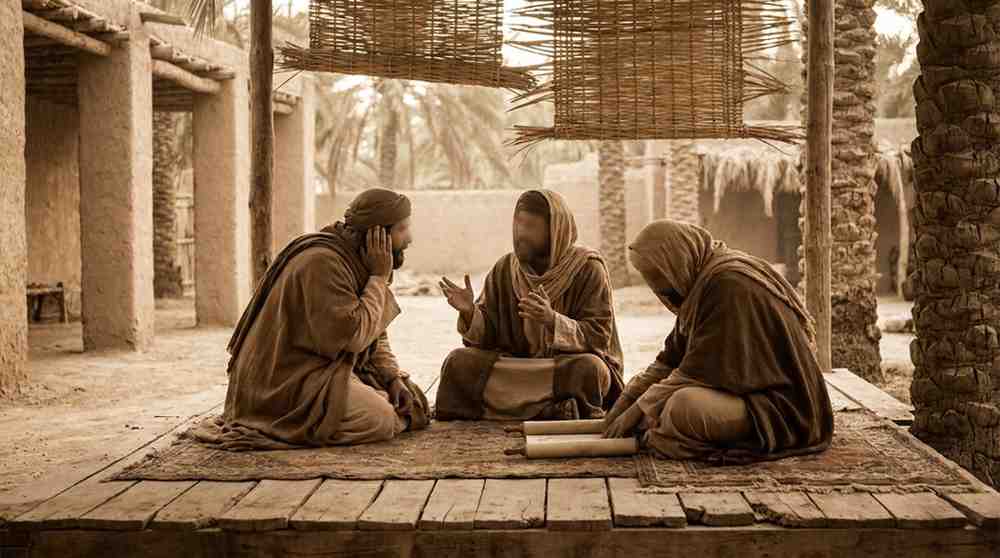
What united them was not just poverty but a particular disposition: they had chosen the company of the Prophet ﷺ and the learning of the deen over every material pursuit. While others traded in the markets, tended their farms, and managed their households, the People of Suffah sat near the Prophet. They listened when he spoke. They memorised what he taught. They asked questions. They learned.
What They Gave Up
To understand the People of Suffah, you have to understand what they chose not to pursue.
Madinah in the early Islamic years was a functioning society with markets, agriculture, and trade. A young man who arrived with nothing could find work, earn a livelihood, establish himself. The Ansar were generous — opportunities existed.
The People of Suffah largely declined these opportunities. Not because they were incapable, but because they calculated differently. They understood — with a clarity that the worldly eye struggles to reproduce — that their position near the Prophet ﷺ was temporary. He would not always be there. The window for direct transmission of knowledge from him was finite.
So they stayed. They accepted charity. They wore simple, patched garments. They sometimes went hungry. And they learned — every day, from the most perfect teacher who has ever lived.
The Prophet ﷺ himself was moved by their condition. He would sometimes delay breaking his fast to ensure they had food. He gave to them from whatever he received. He visited them when they were ill.
What They Received
In exchange for what they gave up, the People of Suffah received something that no trade or agriculture in Madinah could offer: direct, immersive education from the Prophet Muhammad ﷺ.
They heard his recitation of the Quran. They learned the Sunnah — the specific way he prayed, fasted, spoke, dealt with people. They heard his private conversations and his public addresses. They asked questions that others were too busy to ask. They observed what others were too occupied to observe.
The Prophet ﷺ also used the People of Suffah as teachers. When delegations came from distant tribes asking to learn Islam, it was often the people of Suffah who were sent with them. When new regions needed scholars, the People of Suffah went. They were, in the most literal sense, the first Islamic educational institution — trained by the Prophet himself and deployed to carry that knowledge forward.
Abu Hurairah — The Most Famous of the Suffah
Of all the People of Suffah, perhaps the most famous is Abu Hurairah (may Allah be pleased with him).
Abu Hurairah came to Madinah in the seventh year after the Hijra — relatively late. He had no family in Madinah and no trade. He joined the People of Suffah. He was poor — so poor that he later described tying stones to his stomach to suppress hunger, collapsing in the mosque from weakness and being mistaken for someone having a seizure.
But he was present. Every day. In the Prophet’s company. Listening and memorising.
Abu Hurairah narrated more Hadith than any other Companion — over 5,000 narrations. When some Companions expressed surprise at the quantity of his narrations, he explained: “You say that Abu Hurairah narrates too many Hadith from the Prophet ﷺ. While my Muhajirun brothers were busy with trade in the markets, and my Ansari brothers were busy managing their farms and property, Abu Hurairah was present with the Prophet ﷺ, satisfied with filling his stomach. I attended when they were absent. I remembered what they forgot.”
He had chosen proximity over comfort. And the knowledge he preserved — through that choice — is recited and taught across the Muslim world to this day.
What They Became
The People of Suffah became the first generation of dedicated Islamic scholars — teachers, transmitters, and carriers of the Prophet’s knowledge.
Many of them became the Hadith narrators whose chains of transmission form the backbone of Islamic jurisprudence and spiritual life to this day. When a scholar today cites a Hadith — any Hadith — the chain of transmission often passes through one of the People of Suffah, who heard it directly from the Prophet ﷺ.
They were, in terms of worldly status, the poorest of the Companions. In terms of what they transmitted — and what that transmission has meant for 1,400 years of Islamic civilization — they were among the most consequential people who ever lived.
Their choice to value knowledge over comfort was not just an act of personal piety. It was an act of civilisational preservation.
How the Quran Honours Their Choice
“And keep yourself patient with those who call upon their Lord in the morning and the evening, seeking His face. And let not your eyes pass beyond them, desiring the adornments of the worldly life.”
— Surah Al-Kahf, 18:28
This verse was revealed in response to those who suggested the Prophet ﷺ should spend less time with the poor people of Suffah and more time with the wealthy and noble of Makkah and Madinah, whose conversion might bring social prestige.
Allah’s answer was this verse: keep yourself with those who call upon their Lord morning and evening — the People of Suffah, who prayed and remembered Allah constantly — and do not let your eyes turn away from them toward worldly adornment.
The people with the worn garments and the empty stomachs — sitting on a raised platform at the back of a modest mosque in Madinah — were honoured in the Quran. Their choice was affirmed by divine revelation.
Why We Named Our Academy After Them
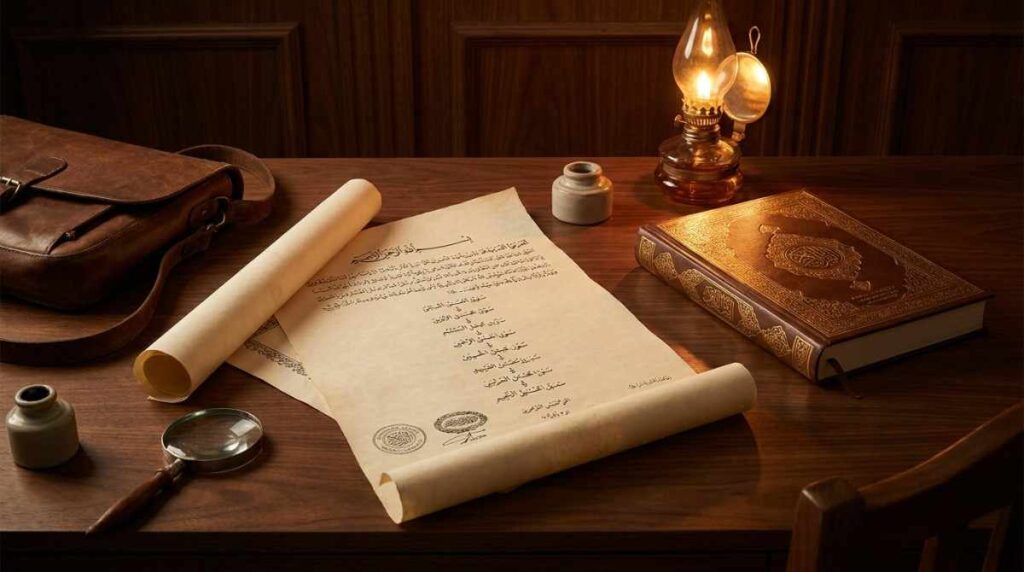
We chose the name Suffah for our academy because it represents something specific: the first dedicated community of Quranic and Islamic learning in history.
The People of Suffah were not scholars who came to the Quran after establishing themselves in the world. They were people who organised their lives around proximity to the knowledge of Allah — who made that learning the centre, and let everything else find its place around it.
That is what we aspire to offer to every student and family who comes to us. Not just classes. Not just credentials. But genuine proximity — through teachers who hold Ijazah certifications that trace their chain of transmission back through generations of scholars, through the Companions who learned at the Prophet’s ﷺ side — including, perhaps, some who sat on the Suffah itself.
When a student at Suffah Quran Academy learns to recite correctly and receives a qualified teacher’s correction, they are joining a chain that has been unbroken since the Prophet ﷺ recited to his Companions on the Suffah and in the mosque beside it.
That is not a small thing. It is the whole thing.
Join the Chain — Begin Your Child’s Quran Journey
Book a free trial class at Suffah Quran Academy. Ijazah-certified teachers. A chain of transmission that reaches back to the Prophet ﷺ. The first class is free.
Book Free Trial Class →Frequently Asked Questions
The People of Suffah (Ahl al-Suffah) were a group of Companions of the Prophet ﷺ — mostly poor migrants without homes in Madinah — who lived on a raised, shaded platform (suffah) attached to the Prophet’s mosque. They dedicated their lives to learning directly from the Prophet ﷺ, becoming the first dedicated Islamic learning community in history.
The People of Suffah learned directly from the Prophet ﷺ — Quran recitation, Hadith, Islamic law, and all aspects of the deen. Many became among the greatest scholars of the early Muslim community. Abu Hurairah, who narrated over 5,000 Hadith, was one of the People of Suffah. They were often sent by the Prophet ﷺ to teach Islam to distant tribes and new regions.
Suffah (صفة) in Arabic refers to a covered, shaded platform or bench attached to a larger structure. The Suffah of the Prophet’s mosque was a raised, roofed area at the back of the mosque where Companions who had no homes could shelter, sleep, and gather to learn. The word implies a place of shelter combined with proximity to something greater.
Abu Hurairah was one of the most prominent People of Suffah. He came to Madinah poor and without family, joined the Suffah, and devoted himself entirely to the Prophet’s company. He narrated over 5,000 Hadith — more than any other Companion — because while others pursued trade and farming, he was always present with the Prophet ﷺ, learning and memorising.
Suffah Quran Academy chose the name to honour the first dedicated Islamic learning community in history. The People of Suffah represent the ideal of organising life around proximity to Quranic knowledge. We named our academy after them to aspire to connect students today with the same Quranic transmission those Companions carried forward — through Ijazah-certified teachers whose chains trace back to that first generation.
Their Platform Was Simple. Their Legacy Is Extraordinary.
The Suffah was not a grand institution. It was a raised platform made of palm wood and covered with a simple roof. The people who lived on it were poor, sometimes hungry, often overlooked by the more prosperous members of Madinah’s society.
But they chose proximity to knowledge. And that choice reverberated across fourteen centuries.
Every Hadith narrated by Abu Hurairah. Every chain of Islamic transmission that passes through a Companion who sat on the Suffah. Every student today who learns from a teacher whose Ijazah traces back through generations to those first learners — all of it connects, in some way, to that simple platform at the back of a mosque in Madinah.
We named our academy after them because we believe what they demonstrated: that proximity to the Quran — real, qualified, verified, continuous proximity — is not just educational. It is transformational. And it is worth organising your life around.
Learn With Teachers Connected to That Chain
Every teacher at Suffah Quran Academy holds an Ijazah — a chain of transmission connecting their recitation back through generations to the first learners. Book a free trial class and experience that connection.
Book Free Trial Class →
Written by Ustaz Ahmad Raza
Senior Quran & Tajweed Teacher · 8 Years Experience · Tajweed, Nazra Quran, Madani Qaida · Urdu, Hindi, English
Ustaz Ahmad Raza has been teaching Quran for 8 years and holds an Ijazah in Quran recitation with Tajweed. He teaches because he believes in the chain — the unbroken line of transmission from the Prophet ﷺ through generations of scholars to every student sitting with a Quran today. The story of the Suffah is, in a sense, the story of why he does what he does.
Meet our teaching team →