This post contains affiliate links.
Published: June 29, 2026 · ⏱ 10 min read · Ustaz Abdul Hannan, Arabic & Islamic Studies Teacher
There is a Hadith in Sahih Muslim in which the Prophet ﷺ reports that Allah said: “I have divided the prayer between Myself and My servant into two halves — and My servant shall have what he asks for.” Allah then explains what He says in response to each verse of Al-Fatiha as the servant recites it.
This Hadith — known as the Hadith of the Division of Al-Fatiha — reveals something that changes how every recitation of this Surah feels: when you recite Al-Fatiha, Allah is responding to you. Verse by verse. Word by word.
Not after you finish. During the recitation. Each verse receives an answer from Allah before you move to the next.
Understanding what you are saying in Al-Fatiha — what each word means, why it is placed where it is, what you are expressing and requesting — transforms Salah from a recitation of memorised text into a living conversation. This guide is a step toward that understanding.
The Surah That Begins Everything
Al-Fatiha — the Opening — is the first Surah of the Quran and the first act of every unit of every prayer. It was called by the Prophet ﷺ: Umm al-Quran (Mother of the Quran), Umm al-Kitab (Mother of the Book), the Seven Repeated Verses, and the Greatest Surah.
“There is no prayer for the one who does not recite the Opening of the Book,” the Prophet ﷺ said. (Sahih Bukhari, Hadith 756). Al-Fatiha is not optional in Salah. It is Salah.
Seven verses. Seventeen times minimum per day. More than six thousand times per year. It is the most recited text in human history — recited by over a billion Muslims every day, in every country, in the same Arabic words, unchanged since it was revealed.
Bismillah ir-Rahman ir-Raheem — The Opening
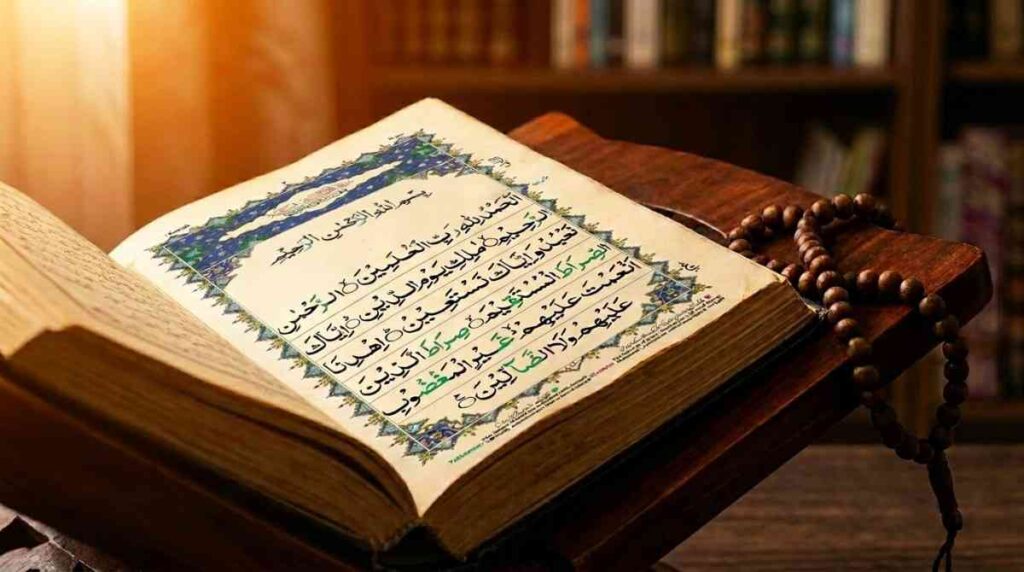
بِسْمِ اللہِ الرَّحْمَٰنِ الرَّحِيمِ
Bismillah ir-Rahman ir-Raheem
In the name of Allah, the Entirely Merciful, the Especially Merciful
Bismillah: bi (بـ) means “in” or “with.” Ism (اسم) means name. Allah (الله) is the proper name of God — the One, the Unique, the only being to whom all worship is directed. Bismillah: In the name of Allah. Not “I begin in my own name” or “in the name of my power” — but in the name of Allah. Every action begun this way is consecrated. Every task started with this phrase is placed within an Islamic framework.
Ar-Rahman (الرحمن): From the root rahma — mercy. The form Rahman carries the meaning of vast, immediate, encompassing mercy. It is mercy that exists right now, extended to all creation — to the believer and the unbeliever, to the human and the animal, to all that exists. Allah’s general mercy over creation is expressed in this name.
Ar-Raheem (الرحيم): Also from rahma, but this form expresses a continuous, specific, particularly tender mercy — directed toward the believers. If Rahman is the vast ocean of mercy covering everything, Raheem is the particular current of that mercy flowing specifically toward those who believe and submit.
Together: Allah is both universally merciful (Rahman) and specifically, tenderly merciful toward the believers (Raheem). This combination appears at the beginning of Al-Fatiha and at the beginning of every Surah in the Quran except one — because everything begins with Allah’s mercy.
Verse 1: Al-Hamdulillahi Rabbil-Alameen
الْحَمْدُ لِلّٰہِ رَبِّ الْعَالَمِينَ
Al-Hamdulillahi Rabbil-Alameen
All praise belongs to Allah, Lord of all the worlds
Al-Hamdu (الحمد): The definite article Al (الـ) means “all” or “the.” Hamdu is praise that includes gratitude — it is not just acknowledging that something is praiseworthy, but expressing thankfulness and devotion to the one being praised. Al-Hamdu lillah: All praise — every form of it, without exception — belongs to Allah. Not some praise. Not most praise. All of it.
Lillah (لله): Li (لـ) means “belongs to” or “for.” Allah. Together: belongs to Allah. Praise is not sent generally into the universe — it is directed specifically to Allah, because He alone is its ultimate object.
Rabb (رب): This word is often translated as “Lord” — but it carries more than lordship. Rabb means the one who creates, sustains, nurtures, and brings something to its completion. A rabb is not just a ruler over something — He is the one responsible for its existence, its growth, and its sustenance. Allah is the Rabb of the Alameen — everything that exists.
Al-Alameen (العالمين): The worlds — plural. Not one world, but all worlds. All of creation: humans, jinn, angels, animals, planets, dimensions of existence we may not perceive. All of it is under the sustaining care of Allah.
When you say this verse, Allah responds (in the Hadith of Division): “My servant has praised Me.”
Verse 2: Ar-Rahmani Ar-Raheem
الرَّحْمَٰنِ الرَّحِيمِ
Ar-Rahmani Ar-Raheem
The Entirely Merciful, the Especially Merciful
These are the same two attributes as in the Bismillah — but their repetition here is not redundancy. It is deliberate placement. The Surah begins with praise for Allah as the Rabb of all worlds — vast, sovereign, sustaining everything. The immediate follow-up is a reminder of His mercy. The God who is Rabb of everything is also the God of Rahman and Raheem.
The scholars note that this verse comes between the declaration of Allah’s lordship (verse 1) and the declaration of His sovereignty over Judgement (verse 3). Mercy is placed at the centre — between majesty and authority — as if to say: the sovereignty you are about to acknowledge belongs to a God whose essential nature is mercy.
When you say this verse, Allah responds: “My servant has extolled Me.”
Verse 3: Maliki Yawmid-Deen
مَالِكِ يَوْمِ الدِّينِ
Maliki Yawmid-Deen
Master of the Day of Recompense
Maliki (مالك): Owner, Master, King — the one who possesses something in its entirety and has complete authority over it. This is not just a ruler who governs but one who owns absolutely.
Yawm (يوم): Day. Not a metaphorical day — the actual Day.
Ad-Deen (الدين): This word is often translated as “Judgement” — but its root meaning is broader. Deen encompasses: religion, submission, recompense, accountability. Yawm ad-Deen is the Day when every act will be accounted for, when every choice made in this world will be weighed, when the ultimate recompense is given.
On that Day, human structures of power, wealth, and status dissolve entirely. No king can protect another. No money can buy an outcome. No tribe can intercede by default. The only authority is Allah’s — which is why He is described as the Master of that Day specifically, not of other days when humans imagine they have some autonomy.
When you say this verse, Allah responds: “My servant has glorified Me.”
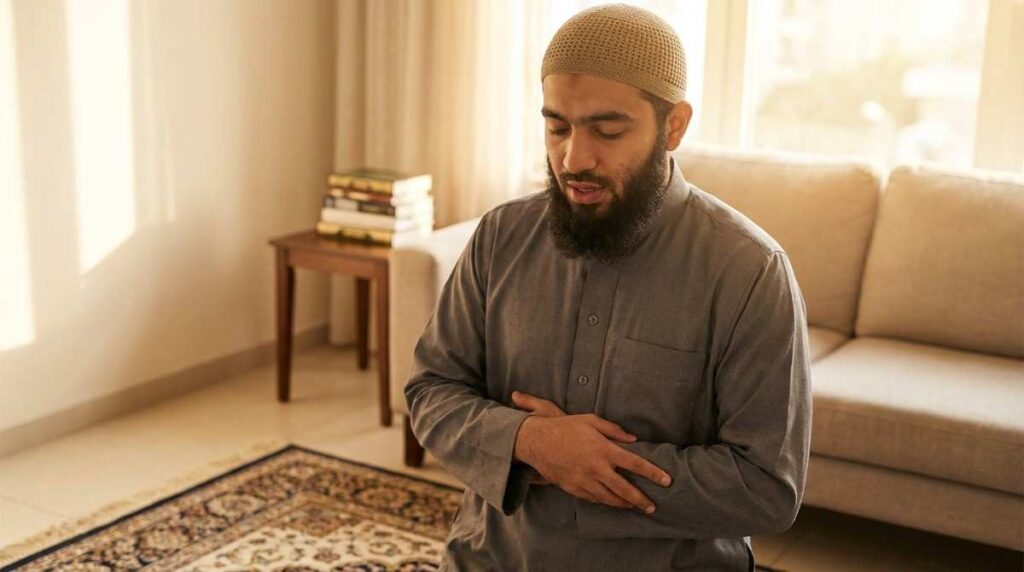
Verse 4: Iyyaka Na’budu wa Iyyaka Nasta’een
إِيَّاكَ نَعْبُدُ وَإِيَّاكَ نَسْتَعِينُ
Iyyaka Na’budu wa Iyyaka Nasta’een
You alone we worship, and You alone we ask for help
This is the pivotal verse — the turn in the Surah where everything shifts.
The first three verses speak about Allah — describing Him in the third person: Al-Hamdulillah (all praise to Him), Rabbil-Alameen (Lord of all worlds), Ar-Rahman Ar-Raheem (the Merciful), Maliki Yawmid-Deen (Master of the Day). The reciter has been establishing who Allah is.
Then, in verse 4, the address shifts to You. The servant turns directly to Allah and speaks to Him: You alone we worship. You alone we ask for help.
Iyyaka (إياك): The structure places the object (“You”) before the verb (“we worship”) — which in Arabic creates exclusive emphasis. It does not say “we worship You” — it says “You — [only] You — we worship.” The word order communicates that worship is exclusively directed to Allah and to no other.
Na’budu (نعبد): We worship — from ibada (عبادة), which means worship and servitude. Ibada is not just ritual prayer. It encompasses every act done for the sake of Allah — prayer, fasting, charity, honesty, patience in difficulty. The declaration “iyyaka na’budu” means: all of this — everything that is worship — is exclusively for You.
Iyyaka Nasta’een (إياك نستعين): You alone we ask for help. Nasta’een comes from isti’ana — to seek help, to rely on. You alone we rely on. In the same exclusive structure as the first half: not “we ask others too” — but exclusively You.
The scholars note the sequence: worship (ibada) is mentioned before seeking help (isti’ana). This is the correct order — first, establish that you are in the right relationship with Allah (worship), and then ask for His help from within that relationship.
When you say this verse, Allah responds: “This is between Me and My servant — and My servant shall have what he asks for.”
Verse 5: Ihdinas-Siratal-Mustaqeem
اهْدِنَا الصِّرَاطَ الْمُسْتَقِيمَ
Ihdinas-Siratal-Mustaqeem
Guide us to the straight path
Ihdina (اهدنا): Guide us — from hidaya (هداية), guidance. This is a request — a Dua directed to Allah, asking for the most important thing any human being can receive. And it is asked every time Al-Fatiha is recited.
Note: the person already praying is already Muslim, already guided to Islam. Why does a Muslim who is already praying ask for guidance in every prayer? Because hidaya — guidance — is not a one-time acquisition. It is a continuous need. A person can know the right path and still need guidance to stay on it, to not waver, to deepen in it, to apply it correctly. The request for guidance in every prayer is an acknowledgement that guidance is not a possession — it is a gift that must be renewed.
Siratal-Mustaqeem (الصراط المستقيم): Sirat means path, road. Mustaqeem from istiqama — to be straight, upright, direct. The straight path: not winding, not crooked, not going around — direct, clear, leading where it says it leads.
The Prophet ﷺ described the Siratal Mustaqeem as the Quran, as Islam, as following his Sunnah, as the path of the righteous. It is the path that leads to Allah’s pleasure and ultimately to Paradise.
Verses 6–7: Siratal-Ladheen An’amta Alayhim — The Path of Those You Blessed
صِرَاطَ الَّذِينَ أَنْعَمْتَ عَلَيْهِمْ غَيْرِ الْمَغْضُوبِ عَلَيْهِمْ وَلَا الضَّالِّينَ
Siratal-Ladheen An’amta Alayhim, Ghayril-Maghdubi Alayhim wa lad-Daalleen
The path of those upon whom You have bestowed favour — not of those who have earned anger, nor of those who have gone astray
This verse defines the straight path in two ways — first by who is on it, and then by who is not.
Siratal-Ladheen An’amta Alayhim (صراط الذين أنعمت عليهم): The path of those upon whom You have bestowed favour. Who are these people? The Quran identifies them in Surah An-Nisa (4:69): the Prophets, the truthful ones (Siddiqeen), the witnesses (Shuhada), and the righteous (Saliheen). These are those who received Allah’s complete favour — who walked the straight path and arrived at its destination.
Ghayril-Maghdubi Alayhim (غير المغضوب عليهم): Not those who have earned anger. The scholars, drawing on the Hadith and tafseer traditions, identify this as those who had knowledge but did not act on it — who knew the truth and turned away from it. Knowledge without action leads to anger, because the responsibility was given and refused.
Wa lad-Daalleen (ولا الضالين): Nor those who have gone astray. Those who act without knowledge — who have sincerity and effort but are misdirected, following paths that do not lead to Allah because they lack the correct guidance. Dalaal is going astray — wandering away from the destination.
The contrast defines the straight path precisely: it belongs to those who have both knowledge and action, who know the truth and follow it. The dangers on either side are knowledge without action and action without knowledge.
When you say these verses, Allah responds: “This is for My servant — and My servant shall have what he asks for.” And the congregation or the one praying alone says: Ameen — meaning: O Allah, accept this.
The Conversation in Al-Fatiha
Now read Al-Fatiha again from the beginning — but this time, understand what is happening:
You begin by praising Allah — His universal lordship, His mercy, His sovereignty over the final Day. With each verse of praise, He acknowledges it: “My servant has praised Me. My servant has extolled Me. My servant has glorified Me.”
Then you turn to Him directly and declare: “You alone I worship and You alone I ask for help.” And He says: “This is between Me and My servant — and he shall have what he asks for.”
And then you ask. You ask for the most important thing in existence: guidance to the straight path. And He says: “This is for My servant.”
This is not a ritual. This is a conversation — initiated by the servant, answered by Allah, happening seventeen or more times per day, every day of a Muslim’s life.
Understanding what you are saying in Al-Fatiha does not change the words. It changes what happens inside you when you say them.
Learn to Recite Al-Fatiha Correctly
At Suffah Quran Academy, every course begins with Al-Fatiha — recited correctly, with Tajweed, with understanding. Book a free trial class to hear what correct recitation of this Surah sounds like.
Book Free Trial Class →Frequently Asked Questions
Surah Al-Fatiha contains praise and gratitude to Allah (verses 1-4), acknowledgement of His sovereignty over the Day of Judgement, then a direct address requesting guidance to the straight path and protection from going astray. Uniquely, it is humans speaking to Allah — making it the most direct and complete prayer in Islam, recited at least 17 times daily in Salah.
The Prophet ﷺ called Al-Fatiha Umm al-Quran (Mother of the Quran) because it contains the essential themes of the entire Quran in seven verses: the Oneness of Allah, His attributes of mercy and sovereignty, human dependence on Him, the request for guidance, and awareness of the Day of Judgement.
Al-Hamdulillahi Rabbil-Alameen means: All praise belongs to Allah, the Lord of all the worlds. Al-Hamdu (praise including gratitude) lillah (belongs to Allah). Rabbil-Alameen: Rabb means the one who creates, sustains, and nurtures — Lord and Sustainer. Alameen means all worlds — all of creation, everything that exists.
Both come from the root rahma (mercy). Ar-Rahman refers to Allah’s vast, all-encompassing mercy covering all creation in the present moment. Ar-Raheem refers to His specific, continuous, particularly tender mercy directed toward the believers. Together they describe mercy that is simultaneously universal and personal.
Ihdinas-Siratal-Mustaqeem means: Guide us to the straight path. Ihdina is a request — guide us. Siratal-Mustaqeem is the straight path: direct, clear, not winding. The Prophet ﷺ described it as Islam, as the Quran, as following his Sunnah. The request is made in every prayer because guidance is not a one-time acquisition — it is a continuous need that must be renewed.
Seven Verses. A Lifetime of Conversation.
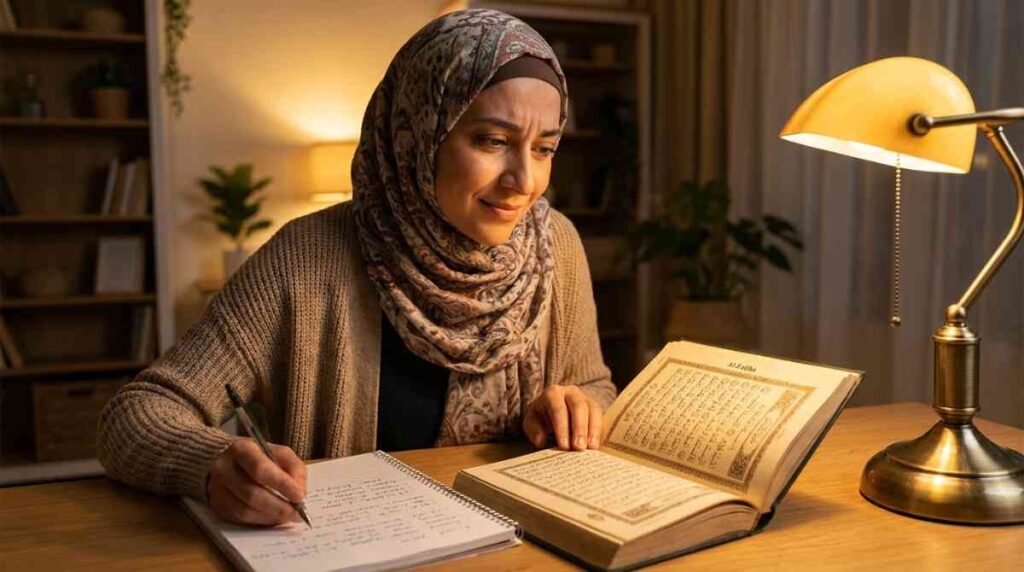
Surah Al-Fatiha will be recited more times in your lifetime than any other text you will ever encounter. Most Muslims have been saying it since childhood. Many have been saying it for decades.
But knowing what you are saying — really knowing, word by word — changes the quality of every recitation. Al-Hamdulillah becomes a genuine act of praise, not a phrase. Iyyaka Na’budu becomes a sincere declaration, not a rehearsed line. Ihdinas-Siratal-Mustaqeem becomes a real request, felt in the heart, not a verbal formula.
This is what Quran education ultimately produces: not just correct pronunciation, but a living relationship with the words. That relationship begins — as it always has, across fourteen centuries — with Al-Fatiha.
Build a Real Relationship With the Quran
Correct recitation. Deep understanding. A qualified teacher. Book a free trial class at Suffah Quran Academy — for your child or for yourself.
Book Free Trial Class →
Written by Ustaz Abdul Hannan
Arabic & Islamic Studies Teacher · 7 Years Experience · Arabic Basics, Duas, Islamic Studies · Urdu, Hindi, Arabic
Ustaz Abdul Hannan teaches basic Arabic grammar, Duas, and Islamic studies in an engaging and practical manner. He focuses on helping students understand Islam with clarity — and believes that understanding Al-Fatiha, the prayer every Muslim says dozens of times a day, is one of the most transformative things Islamic education can offer.
Meet our teaching team →