This post contains affiliate links.
Published: June 22, 2026 · ⏱ 7 min read · Ustaz Ahmad Raza, Senior Quran & Tajweed Teacher
There are few acts in a Muslim parent’s life that carry the weight of the decision to give their child proper Quran education. It is not simply an educational choice. According to the teachings of the Prophet Muhammad ﷺ, it is an investment in the next life — for the child and, through the child, for the parent.
This article brings together the most important Hadith on the virtues of teaching Quran to children — not as a list of references, but as a living reminder of what is at stake in this choice and what is being built when a parent commits to it.
The Best of People — Teaching Quran Is the Highest Occupation
“The best of you are those who learn the Quran and teach it.”
— Prophet Muhammad ﷺ | Sahih Bukhari, Hadith 5027
The Prophet ﷺ gave this description — the best of you — to those engaged in two activities: learning the Quran, and teaching it. He did not restrict “teaching” to professional scholars or formal institutions. The parent who sits with their child and recites Al-Fatiha until the child knows it, the parent who arranges a qualified teacher and ensures their child attends every class, the parent who reviews their child’s Sabaq every evening — all of these are teaching the Quran.
This Hadith places Quran teaching not as an admirable hobby or a cultural tradition, but as the defining characteristic of the best of the Muslim community. Parents who invest in their children’s Quran education are not merely being good parents. They are occupying the highest description the Prophet ﷺ gave to any Muslim.
Sadaqah Jariyah — The Reward That Does Not End
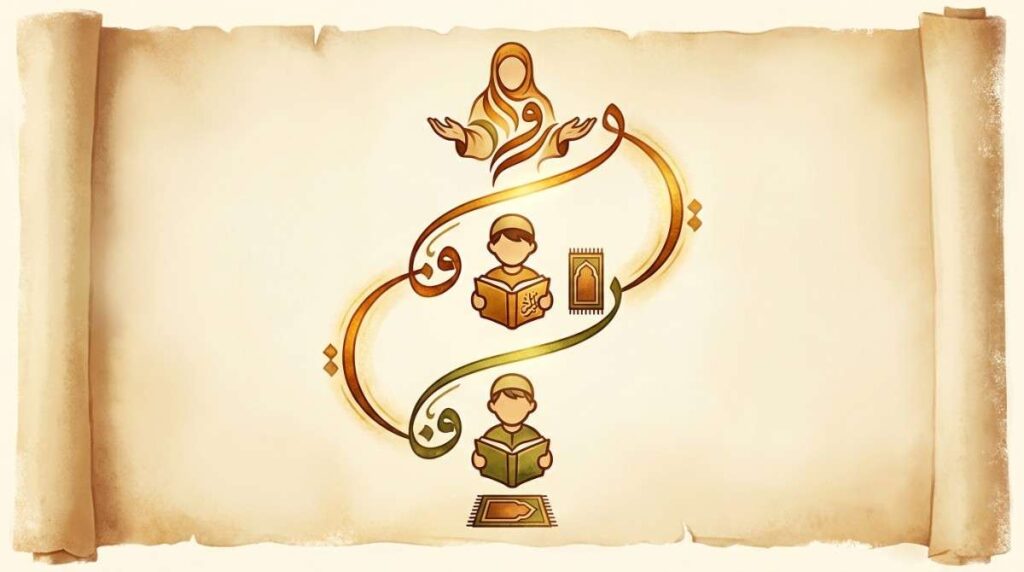
“When a person dies, all their deeds come to an end except three: a continuing charity, knowledge from which others benefit, or a righteous child who prays for them.”
— Prophet Muhammad ﷺ | Sahih Muslim, Hadith 1631
This Hadith is one of the most profound in the entire corpus of Islamic teaching — and Quran education given to a child fulfils all three categories simultaneously.
A continuing charity. The financial cost of a child’s Quran education — whether through a teacher’s fees, resources, or time — is charity that continues bearing fruit long after it is given. Every session paid for, every Quran book purchased, every hour of parental time invested in listening to revision — all of it is a form of ongoing charity whose effects continue in the child’s recitation and prayers.
Knowledge from which others benefit. Quran knowledge given to a child does not stay only with that child. It flows forward. The child who learns the Quran teaches their own children. Their children teach theirs. The chain of transmission initiated by a parent who made the investment extends forward through generations — all traceable to that first decision.
A righteous child who prays for them. A child raised with the Quran grows into a Muslim who prays — who recites the Quran in every Salah for the rest of their life. Those prayers contain the parent’s Quran investment. And those prayers for the parent, offered by a righteous child across decades, are among the most powerful forms of Sadaqah Jariyah available.
Consider the arithmetic: a child who learns the Quran begins praying five times daily. Each prayer contains Al-Fatiha — seven verses — and additional Surahs. Over a lifetime of 60 years of prayer, the parent’s investment in their child’s Quran education generates hundreds of thousands of acts of worship. The reward flowing back to the parent from each of these does not end at death. It continues through the child’s continued recitation — and through their children after them.
The Crown of Light — The Parents of a Hafiz
“Whoever memorises the Quran and acts in accordance with it, Allah will cause his parents to wear a crown on the Day of Resurrection whose light is better than the light of the sun.”
— Prophet Muhammad ﷺ | Abu Dawud, authenticated
The parents of a Hafiz receive a specific, extraordinary honour on the Day of Judgement — a crown whose light surpasses the light of the sun. This promise is extended not to the Hafiz alone, but to the parents who made the Hifz possible.
This is significant. The child is the one who memorised. The parents are the ones who arranged the teacher, maintained the schedule, listened to the daily Sabaq, drove to classes, funded the education, encouraged in the difficult months, and held the family commitment across years. The crown is for all of that — not for the ease of it, but for the sustained investment across the full journey.
Many parents who enrol their child in Hifz focus entirely on the child’s achievement. This Hadith reminds them that the achievement belongs to the family — and the honour will be received together.
The Parental Obligation — What Scholars Say
The virtues of teaching Quran to children are not simply motivational encouragements. Islamic scholars have consistently held that providing children with Islamic education — including Quran recitation — is an obligation upon parents.
Ibn Al-Qayyim al-Jawziyyah, one of the most significant Islamic scholars of the 14th century, wrote in his work on child-rearing: “Whoever neglects to teach their child what benefits them and leaves them without direction has done them the greatest wrong. Most of the corruption of children comes from their parents who neglected them and failed to teach them the obligations of the religion.”
This is not a peripheral matter. It is a central parental responsibility — one that the Prophet ﷺ, the Companions, and the generations of scholars after them consistently identified as among the most important things a Muslim parent does for their child.
The obligation does not require the parent to be a scholar. It requires the parent to ensure the child receives the instruction they need — through whatever means are available, including arranging a qualified teacher.
What Quran Education Includes — More Than Recitation
When the Hadith speak of teaching Quran to children, they are not referring only to the technical skill of Arabic letter recognition and Tajweed application. They are referring to a relationship — between the child and the Quran — that encompasses:
- Correct recitation. Reading and reciting the Arabic text accurately, with Tajweed, from the age of first learning through the end of the child’s life.
- Familiarity and love. Growing up with the Quran as a presence in the home — heard, recited, discussed, and returned to — so that the relationship is one of belonging rather than obligation.
- Use in worship. Reciting the Quran in the five daily prayers — so that the Quran is not merely something studied but something lived in the texture of every day.
- Understanding and connection. Whatever level of understanding a child develops — through translation, through basic tafseer, through the meaning explained alongside recitation — deepens the relationship and extends the benefit of the teaching into how the child understands their life and their deen.
The parent who provides all of these — or who puts in place the conditions for all of these — is giving their child something that no other gift approaches in its lasting significance.
You Do Not Need to Know It Yourself
One of the most common barriers parents express is this: “I don’t know the Quran well enough myself — how can I teach my child?”
The answer from Islamic scholarship is clear: the parental obligation is to ensure the child receives the teaching, not to personally deliver every lesson. A parent who cannot teach Tajweed but arranges a qualified teacher who can — and who maintains the child’s attendance, supports daily revision, and creates a Quran-positive home — is fulfilling their obligation completely.
In fact, a parent who arranges excellent qualified instruction for their child, despite their own incomplete Quran knowledge, may be fulfilling this obligation with more effort and sacrifice than a parent for whom it comes easily. And the reward reflects the effort.
The parent’s own journey with the Quran and the child’s journey are separate — but they can be parallel. Many parents who enrol their child in Quran lessons begin or resume their own Quran learning alongside. The household where both parent and child are learning — at their respective levels, supporting each other — is one of the most beautiful expressions of what the Hadith on teaching Quran describes.
The Role of the Teacher in Your Child’s Reward
The Quran teacher your child learns from is not simply a service provider. In the Islamic tradition, the teacher of Quran occupies a specific, honoured role — one that the Prophet ﷺ described as the highest occupation a person can have.
When you choose a qualified, Ijazah-certified teacher for your child, you are connecting your child to a chain of transmission that stretches back to the Prophet ﷺ himself. The teacher’s Sanad — their chain of certification — is the thread that connects your child’s recitation to its source.
This choice is not administrative. It is spiritual. The teacher through whom your child receives the Quran will be, in some sense, part of your child’s Quran for the rest of their life — their voice, their correction, their patience present in every letter your child recites.
Choose that teacher with care. And when the right teacher is found, trust the process — through the difficult months, the motivation drops, the forgotten portions, the years of patient daily work — because what is being built is not temporary. It lasts.
Begin Your Child’s Quran Journey
Book a free trial class at Suffah Quran Academy. Ijazah-certified teachers. One-on-one sessions. Female teachers available. The first step in building something that lasts.
Book Free Trial Class →Frequently Asked Questions
The Prophet ﷺ said: “The best of you are those who learn the Quran and teach it.” (Bukhari). A parent who ensures their child receives proper Quran education participates in this directly. Every Salah the child prays for the rest of their life — containing the Quran the parent made possible — continues to generate reward as Sadaqah Jariyah, even after the parent’s death.
Sadaqah Jariyah means a continuing charity — reward that continues after death. The Prophet ﷺ identified three: a continuing charity, knowledge from which others benefit, or a righteous child who prays for them. A child who learns the Quran and recites it in their prayers for decades represents all three simultaneously — generating reward for the parent across an entire lifetime and beyond.
The Prophet ﷺ described the parents of a Hafiz being given a crown of light on the Day of Judgement whose radiance surpasses the light of the sun. (Abu Dawud). This reward applies to parents who enabled and supported the Hifz journey — not only the child who completed it. The honour belongs to the family.
Islamic scholars consider it an obligation upon parents to ensure their children receive Islamic education, including Quran recitation. Ibn Al-Qayyim stated that neglecting a child’s Islamic education is a grave wrong. Parents fulfil this obligation by arranging qualified instruction — they do not need to personally teach every lesson, but they must ensure the education happens.
No. The parental obligation is to ensure the child receives qualified instruction, not to personally deliver every lesson. A parent who arranges an excellent teacher, maintains attendance, supports daily revision at home, and creates a Quran-positive environment is fulfilling this obligation fully — regardless of their own level of Quran knowledge.
The Gift That Outlasts Everything Else You Give
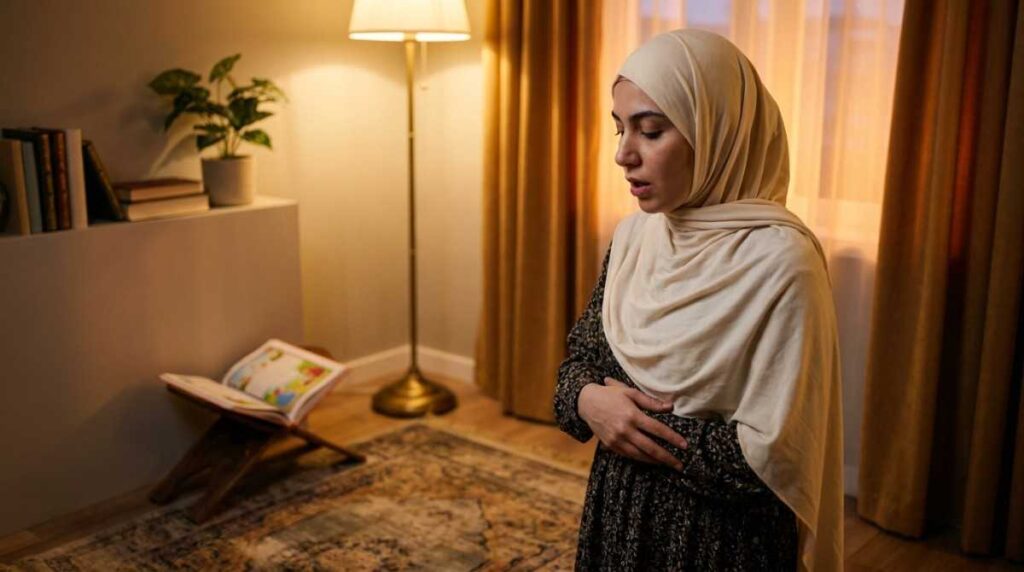
Every gift a parent gives their child has a limit. Toys are outgrown. Education becomes outdated. Wealth passes through hands. Property changes ownership.
The Quran given to a child does not have a limit. It is recited in their prayers every day of their life. It is passed to their children and their children’s children. It intercedes for them on the Day of Judgement. It builds a crown for the parents who made it possible.
No other gift works like that. And no other investment a parent makes will generate the same return.
The Prophet ﷺ called those who teach the Quran the best of people. The choice to teach your child — to ensure they have a qualified teacher, to support the daily practice, to create a home where the Quran is present and valued — is the choice to be among the best of people. And to give your child the same opportunity.
Give Your Child the Gift That Lasts
Book a free trial class. One session with a qualified, Ijazah-certified teacher — no payment, no commitment. The beginning of something that will outlast everything else you give them.
Book Free Trial Class →
Written by Ustaz Ahmad Raza
Senior Quran & Tajweed Teacher · 8 Years Experience · Tajweed, Nazra Quran, Madani Qaida · Urdu, Hindi, English
Ustaz Ahmad Raza has spent 8 years teaching Quran to children and adults — and has seen firsthand the transformation that happens in a child who grows up with the Quran. He teaches because he believes in what the Prophet ﷺ described: that those who teach the Quran are the best of people, and that the gift given to a child through qualified Quran education is the most enduring thing a parent can offer.
Meet our teaching team →